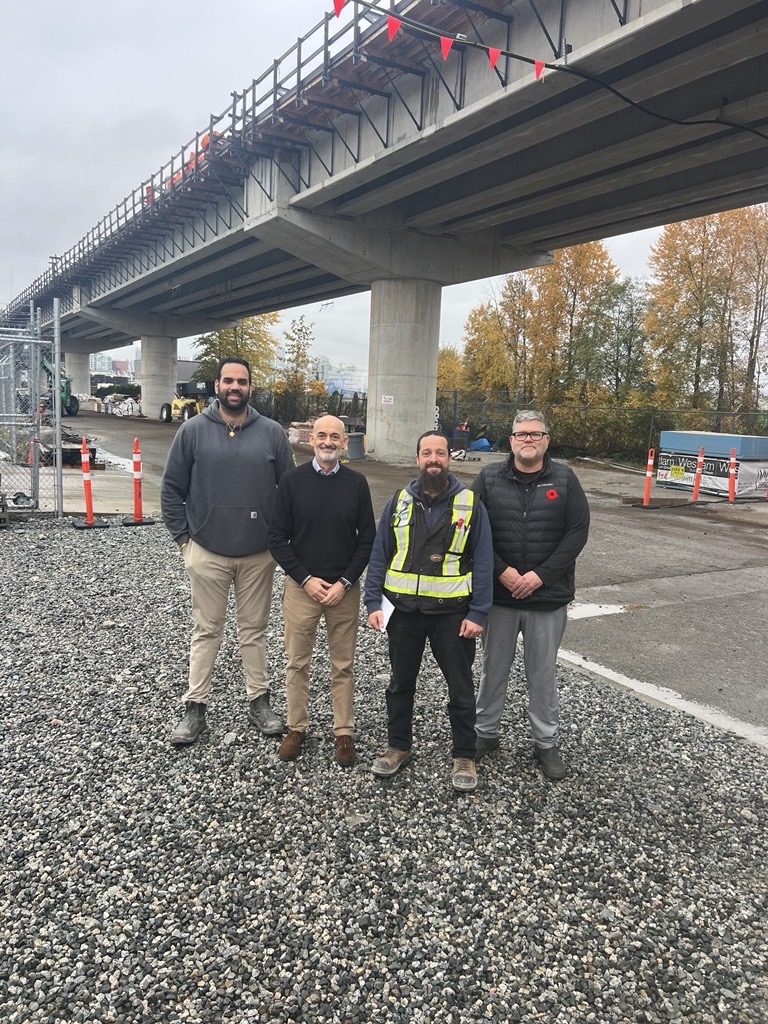
I still remember stepping onto the empty site as an apprentice, nothing but dirt and possibility. Now, as a foreperson, I get to look back and see how each stage of the project was part of a bigger journey, not just for me but for everyone who will use the Broadway Subway.
My path to the Broadway Subway Project wasn’t exactly straightforward. I actually have a business degree, worked in human resources, and then spent time as a technician at TELUS, which got me curious about electrical work. The turning point came with COVID. Everything paused, and I thought, “OK, I’ve got to take the plunge.” So I went back to school, started from scratch, and became an electrical apprentice on the Broadway Subway Project with BCIB and Western Pacific Electrical.
Taking Ownership
As an apprentice, you must take ownership of your learnings and your growth and speak up. I did that and it’s what led me to progress from apprentice to foreperson status.
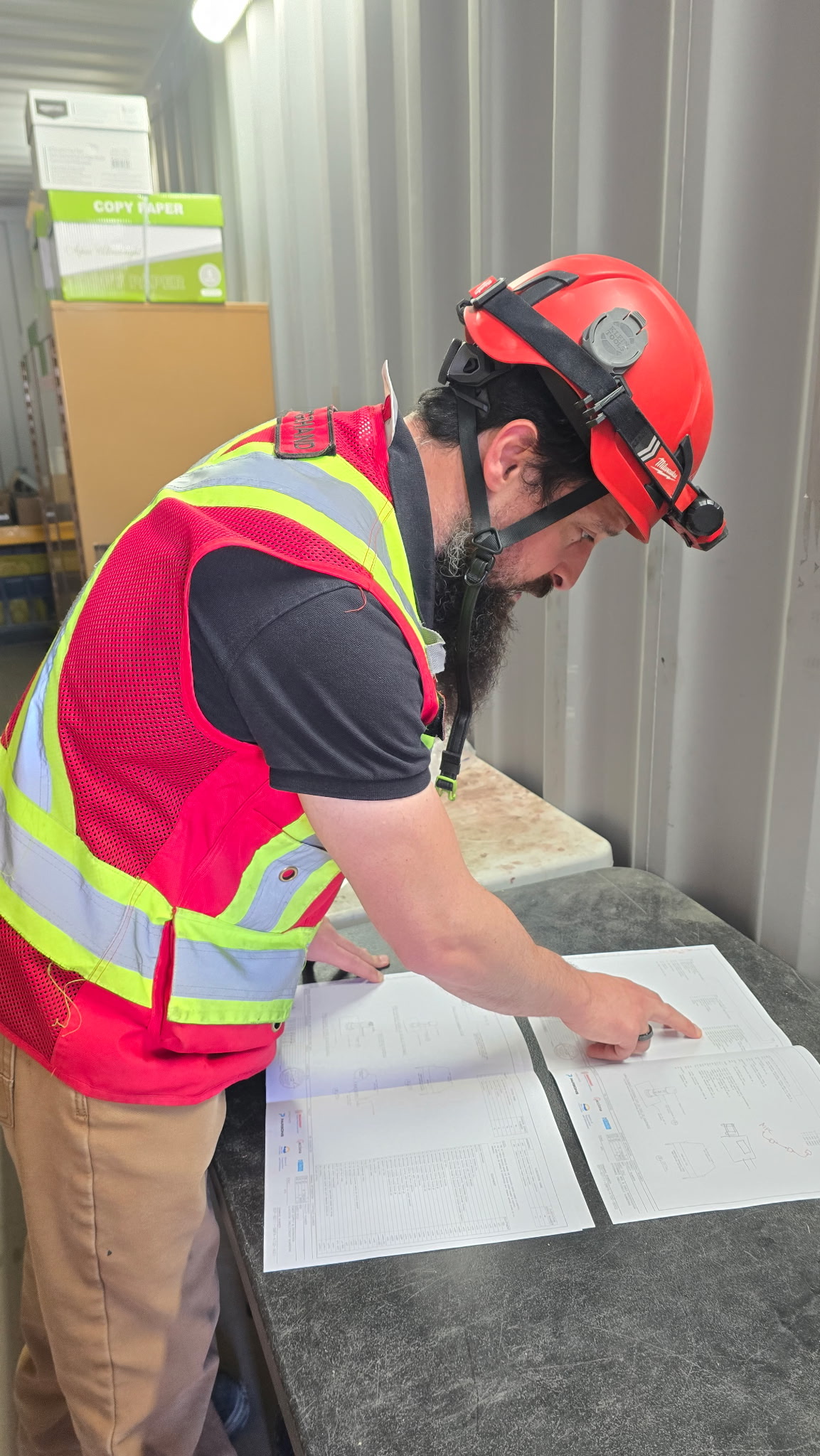
I let my leadership know I wanted to learn. Once a task was completed, I anticipated the next needs. I learned how to solve problems, I interacted with different stations on site, and I built rapport with forepersons from other trades to elevate my understanding of what it takes to advance. Before I knew it, I was taking electrical prints and drawings back home to study and get familiar with them.
I still recall the first time I supervised an installation. I requested the prints from my management, carefully reviewed them, and conducted a successful installation. From there on, I was given more responsibilities and leadership opportunities.
Family and Construction
Balancing work and family isn’t always easy, especially with five kids at home and my youngest is only three years old. But there’s real pride in being able to share this journey with them, and knowing my children—and, one day, my grandchildren—will ride a train on a subway line I helped build. There’s something special in knowing they’ll be able to say, “My father, my grandfather worked on this project.”
That’s what makes the early mornings, the long hours, and the sweat all worthwhile. We put so much effort into the quality of what we build—you feel it in your hands; you see it in the finished product. And like your family, you know it will outlast you.
Being Muslim on the Jobsite
One of the things that stands out most about this job is the sheer diversity. On the Broadway Subway Project, I hear so many different languages, see so many backgrounds, and, honestly, it’s hard to tell who’s a minority here. Everybody is comfortable. People respect different faiths and cultures; I pray daily, sometimes I take a corner in the middle of the site, and I have yet to face a single negative reaction—if anything, people go out of their way to accommodate me.
The ROI [Respectful Onsite Initiative] training we receive most likely helps the level of understanding, appreciation, and consideration present on site. It’s a training that is out of the norm. Companies I’ve worked for in the past didn’t have any training that touched on diversity, understanding cultures, understanding the land, and all the other subjects that ROI addresses.
The Right Career Choice
I’m from a Middle Eastern background, and when I was young, family members would ask, “Do you want to be a pilot? A doctor?” The trades are often looked down upon, seen as a last resort rather than a first choice—in some cases because some countries don’t have any regulating bodies and unions to protect workers. But here, it shouldn’t be viewed that way.
I spent five years getting my business degree. I graduated with over $50,000 in student debt, very little experience, and no job prospects. Compare that to the trades, which I wish I’d started straight out of high school, where the security, financial stability, and sense of contribution are unmatched.
Tradespeople are also always needed, whether the economy is good or bad. Infrastructure will always need to be built, fixed, maintained, or upgraded.
The trades offer respect, growth, and a chance to build infrastructure that matters to communities. When the time comes to use this new subway line, I hope people think about the people behind the work—our sweat, our stories, our hopes, and maybe, just maybe, they’ll look at construction a little differently.
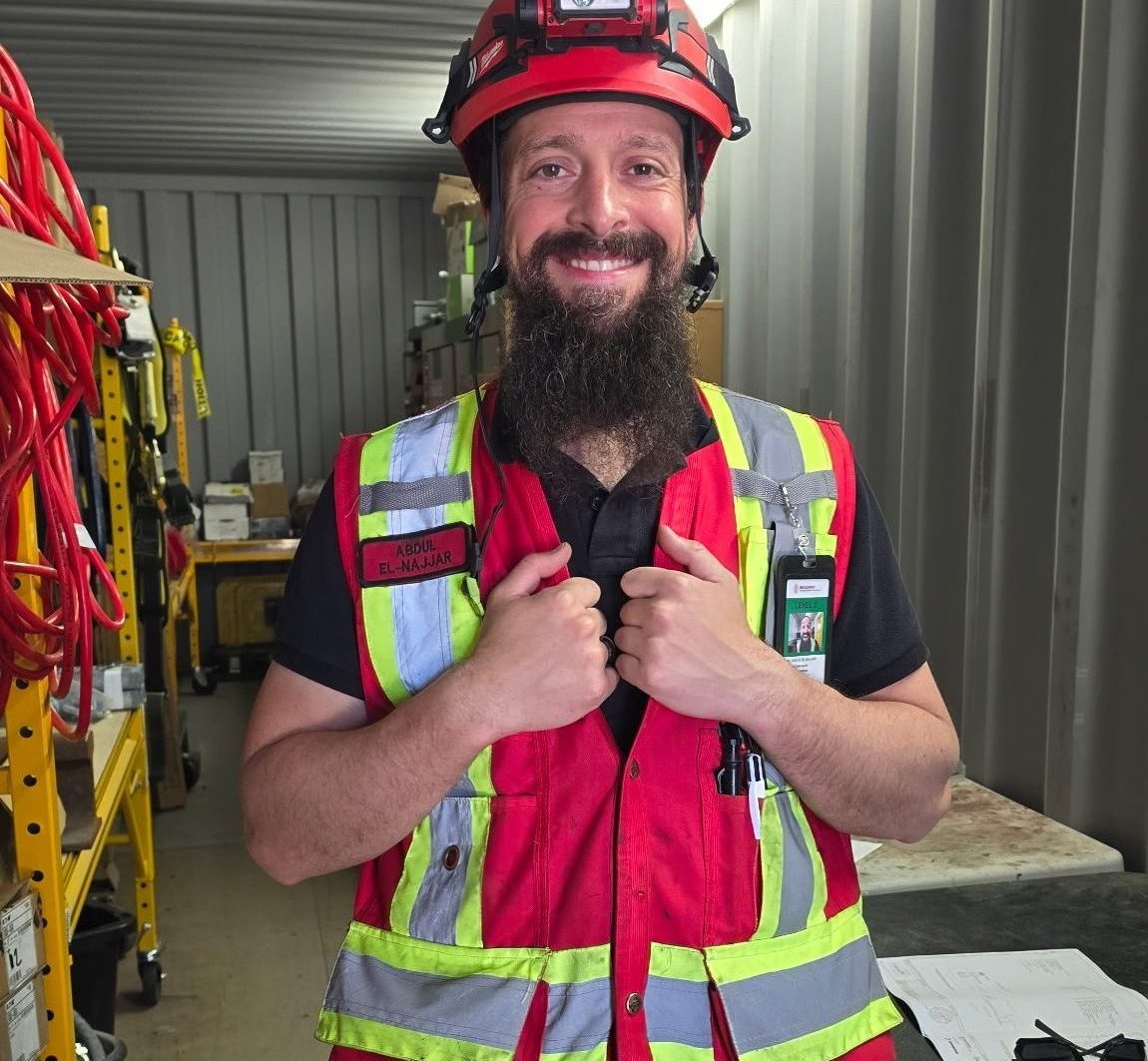
Abdul started as an electrical apprentice on the Broadway Subway Project in 2022. In 2025, he became a foreperson on the project.
To learn more about BCIB’s Respectful Onsite Initiative training visit BCIB’s ROI Training.